
Who it’s for
EMMa shows each person what matters to their role.
Thirty-four standard factory roles come with EMMa Operations. During implementation these roles are connected to your real departments, job titles and employees — that is configuration, not software development. Below is what it means for the eight functions that carry a plant.
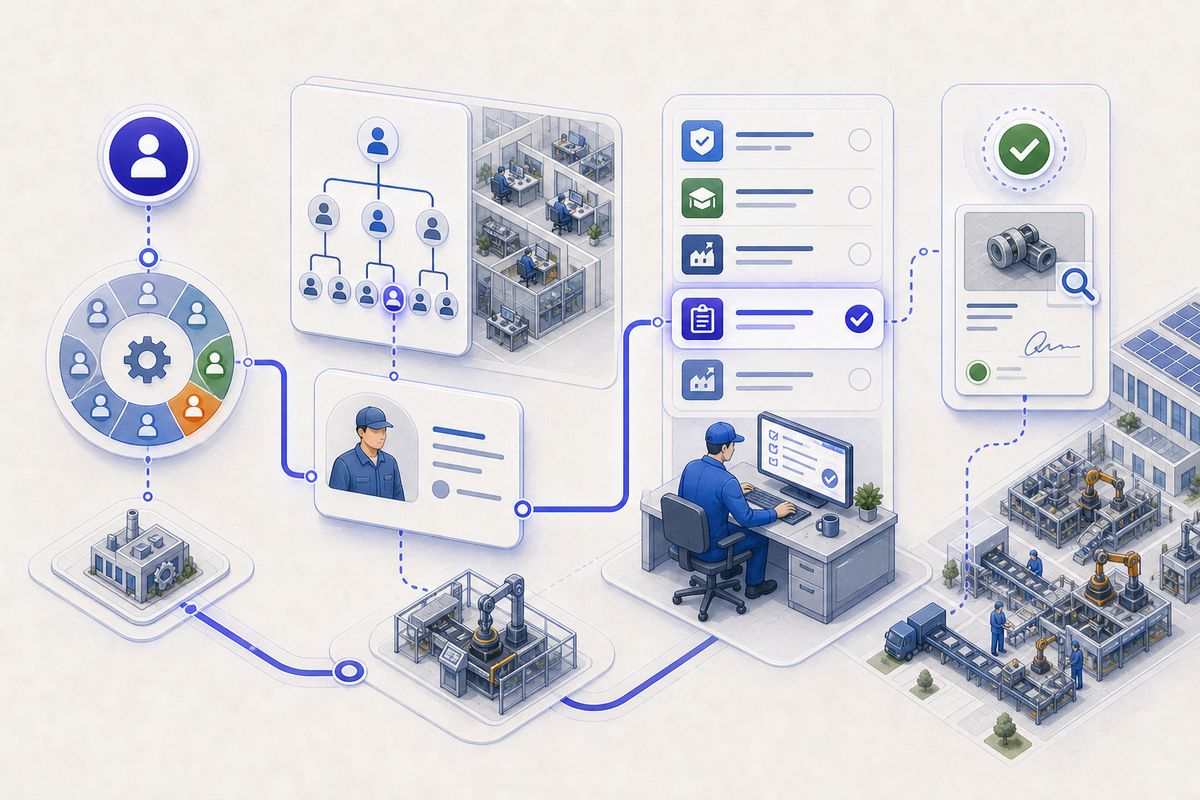
Standard roleTrainer
Job titleTraining Specialist
OrganizationA named person
In EMMaAn assignment, with a due date
01 · Performance
Plant & operations management
Is the plant on target, and what is the worst thing open right now?
What changes
The home screen shows only the areas you manage, biggest problem first, each with its main warnings and a way in. A KPI below target is not a discussion at the next meeting: it has an owner, a target, a review date and a link to the tasks raised because of it.
What you get
- Every KPI has one formula and one meaning, the same for everyone
- Comparison values, so a number can be judged and not only read
- Values are kept up to date in the background, not calculated when you open the page
- Management review runs as a process, with assigned actions and a proper close
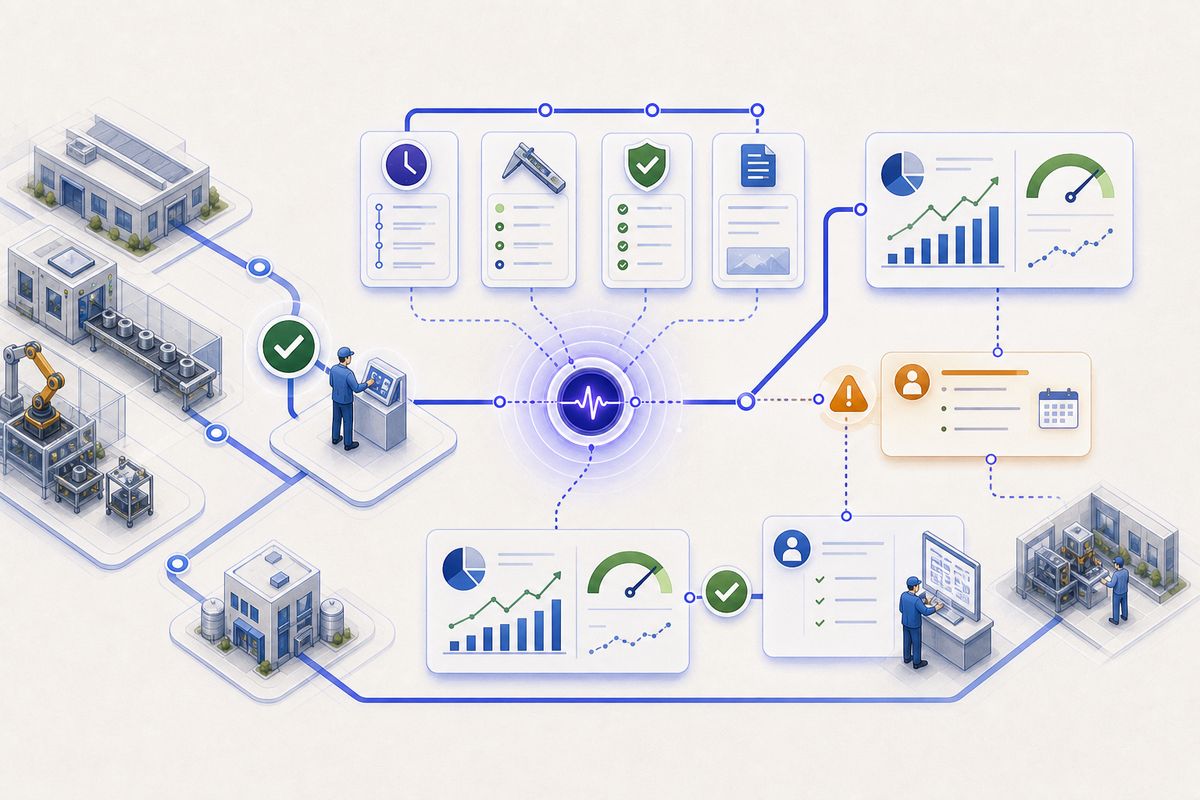
The route you sit on
- Evidence
- KPI checkpoint
- Deviation
- Named action
- Verification
- Standardisation
02 · Production
Production management & shift leaders
What is running, what stopped it, and what did this shift produce?
What changes
Production is run and recorded by shift and by area. Produced quantity, scrap, downtime, material used, quality checks and machine settings are recorded where the work happens, against the version of the instructions that was valid at the time.
What you get
- Shift screens built for gloved hands, on handhelds and wall terminals
- See the last available production data, with the time it was taken, if the live connection drops
- See who is assigned to the shift, and keep the record
- Machine counter readings and produced cycles
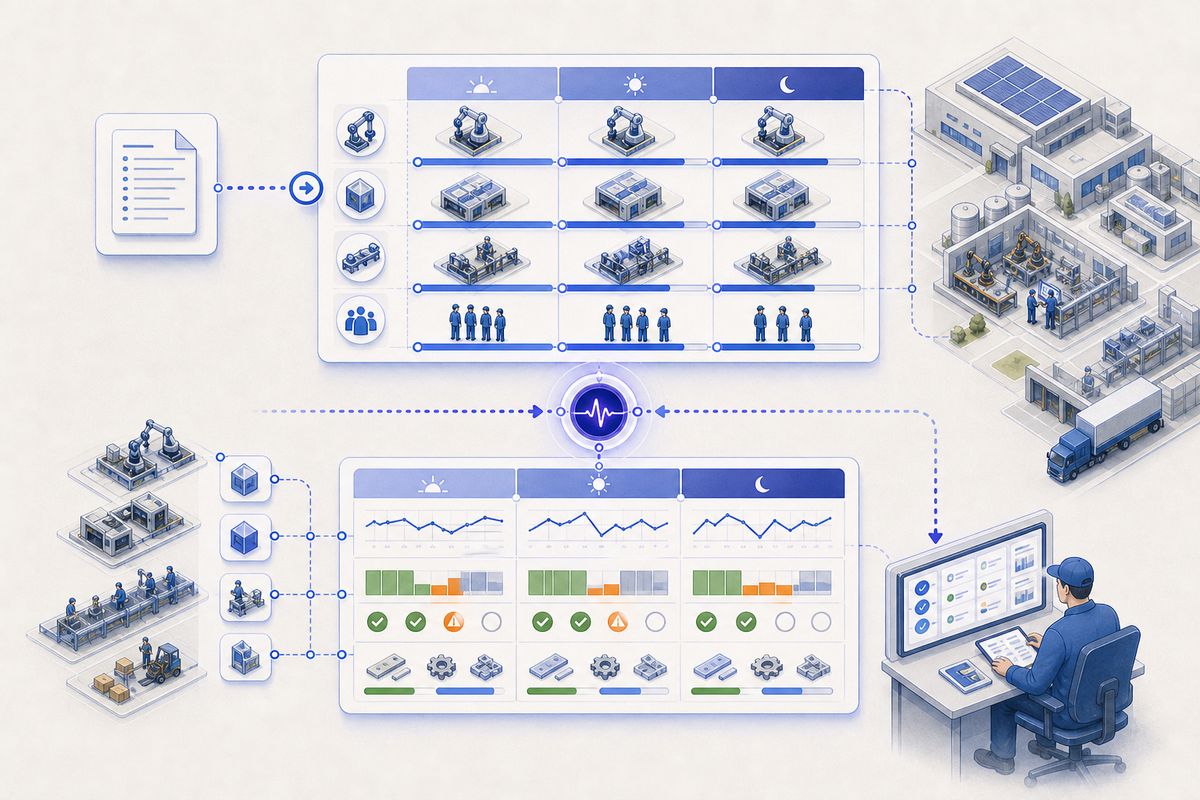
The route you sit on
- Order released
- Setup
- Production
- Declaration
- Handover
- Shift close
03 · Planning
Production planning
Can we make the required quantity with the machines, people and materials we have?
What changes
EMMa checks materials and available capacity before the plan is released. You can plan by shift, reserve the machines and people you need, group similar production to reduce setups, and see when the plan cannot be achieved.
What you get
- Reserve machines and people, and see conflicts
- Group similar orders to reduce setups
- Every plan change is kept in history, not overwritten
- Machine and people availability exceptions are handled openly
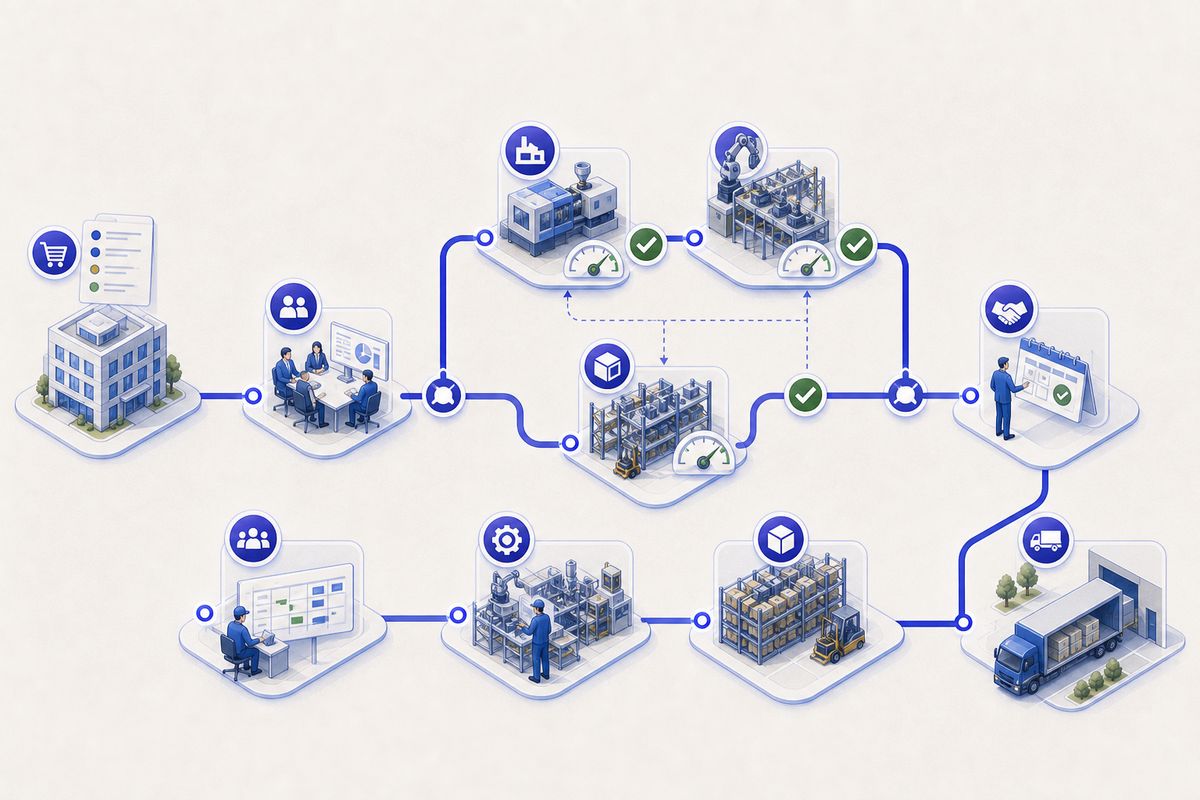
The route you sit on
- Demand
- Capacity check
- Material check
- Reservation
- Schedule
- Release
04 · Commercial
Customer logistics & commercial
Can we meet this order, and what do we tell the customer?
What changes
An order is checked before a date is promised. EMMa checks capacity and materials, and where the request cannot be met it proposes alternative delivery dates to give the customer, instead of silence.
What you get
- Customer agreements, terms and prices, with their history
- Customer forecasts by period
- Orders, changes and cancellations, with the full history
- A delivery promise needs an explicit approval
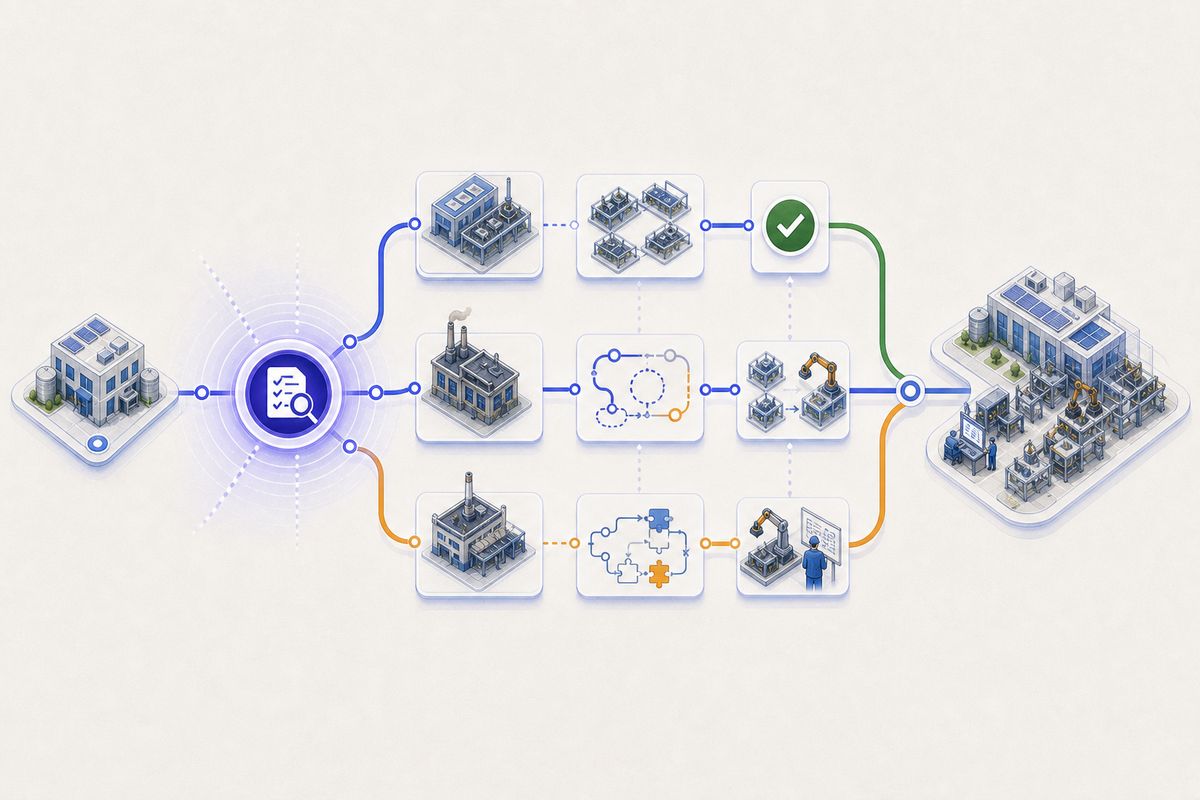
The route you sit on
- Order
- Evaluation
- Alternative
- Commitment
- Plan
- Delivery confirmed
05 · Quality
Quality
What is outside specification, what has been stopped from spreading, and what is closed?
What changes
When a quality problem is found, EMMa records the problem, assigns the immediate actions to stop it spreading, tracks the root cause and the corrective actions, and keeps the full history until the problem is closed. Deciding what happens to the affected parts is a step with an owner and a due date, not an email thread.
What you get
- Quality plans, incoming inspection and checks during production
- Stop the problem spreading, and record what was decided about the parts
- Chase the supplier for an answer, and record it
- Machine setting checks recorded against the rules valid at the time
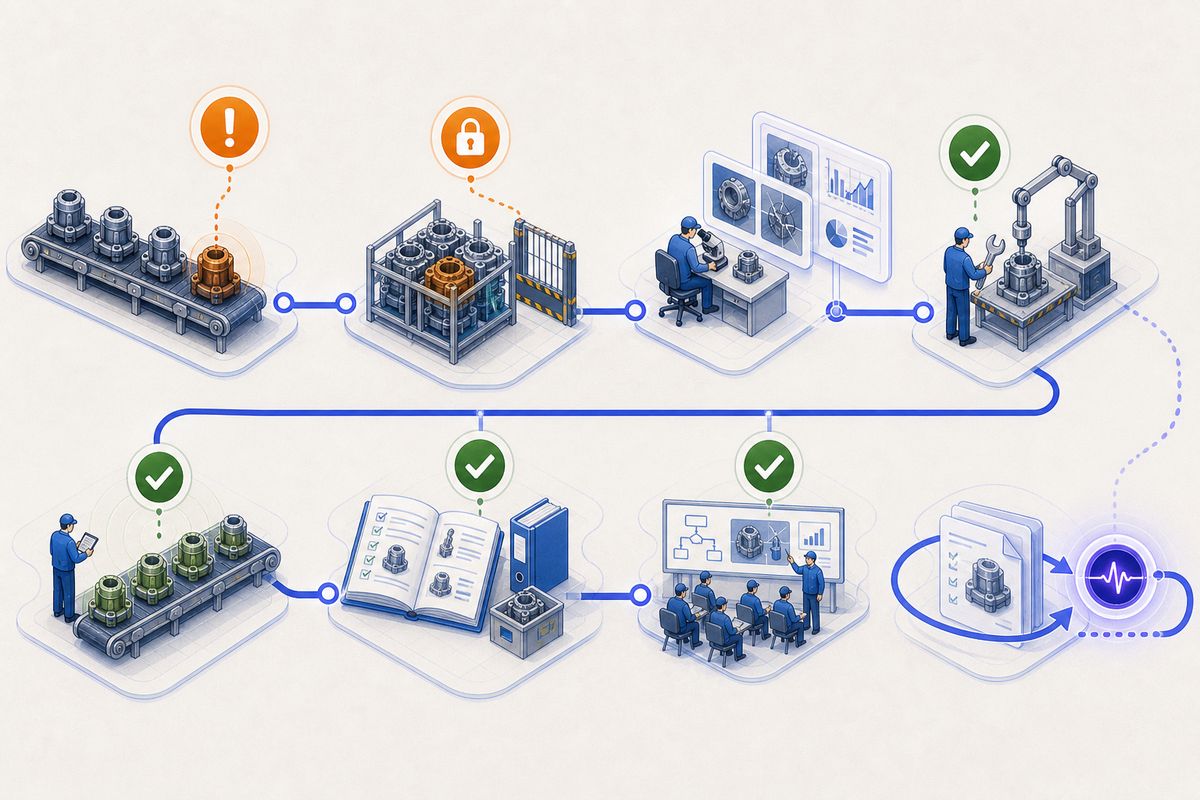
The route you sit on
- Detection
- Containment
- Root cause
- Correction
- Verification
- Standardisation
06 · Maintenance
Maintenance & tooling
What is stopped, what maintenance is due, and what does it need?
What changes
See what equipment is stopped, what maintenance is due, who is working on it, which spare parts are needed and what happened before. When a job is created it takes its own copy of the checklist, so changing the template later cannot change what the technician was actually told to do.
What you get
- Preventive maintenance jobs and breakdown repairs
- Assign technicians, with a job list built for handhelds
- Record the failure and its cause against the machine
- Spare parts: stock rules, reservations, what was used, and low-stock alerts
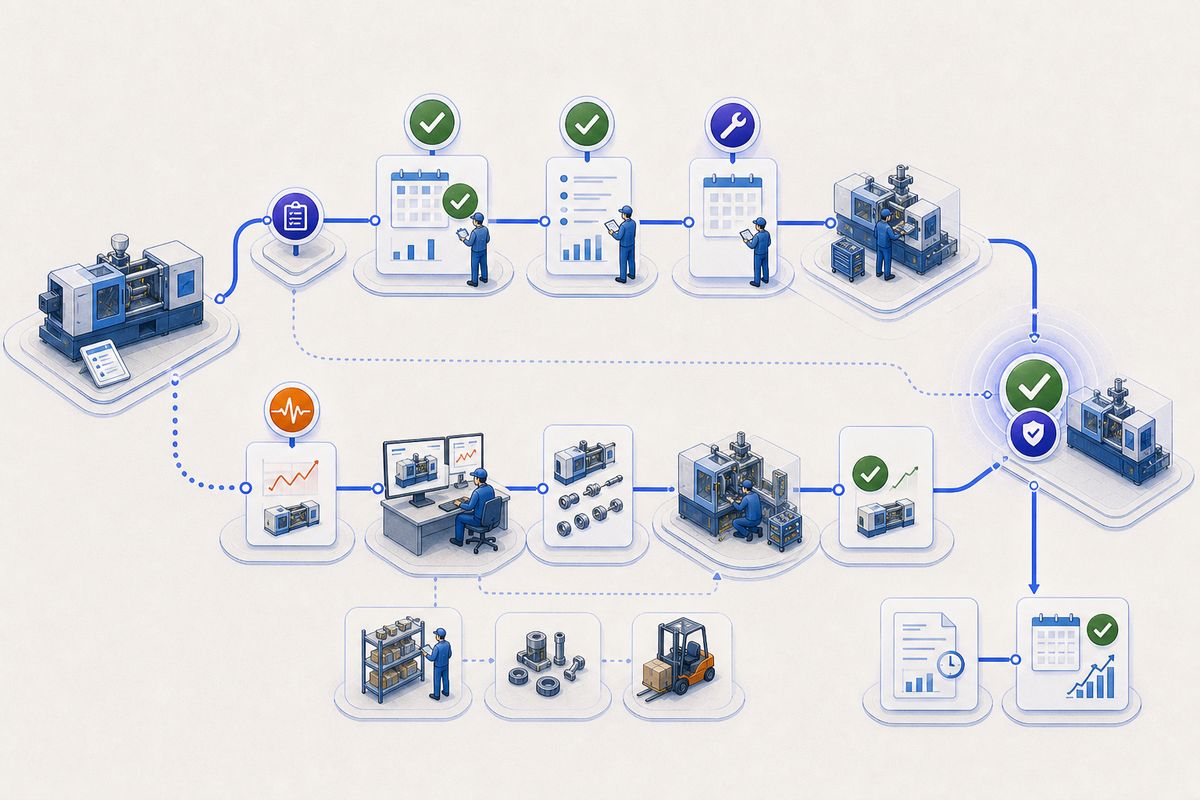
The route you sit on
- Registered
- Plan
- Preventive
- Breakdown
- Repair
- Verified
07 · People
HR, training & competence
Who is qualified, who is missing training, and who starts on Monday?
What changes
When a new employee is created, EMMa can start onboarding and training automatically, instead of somebody remembering to send an email. It also checks that people have the skills and training needed before they are given the work.
What you get
- Skills held by each employee, and the skills each job requires
- Documents people must read, with confirmation and a short check that they understood
- Evaluations, leave, and leaving the company
- Warnings before a qualification expires, which cannot be switched off
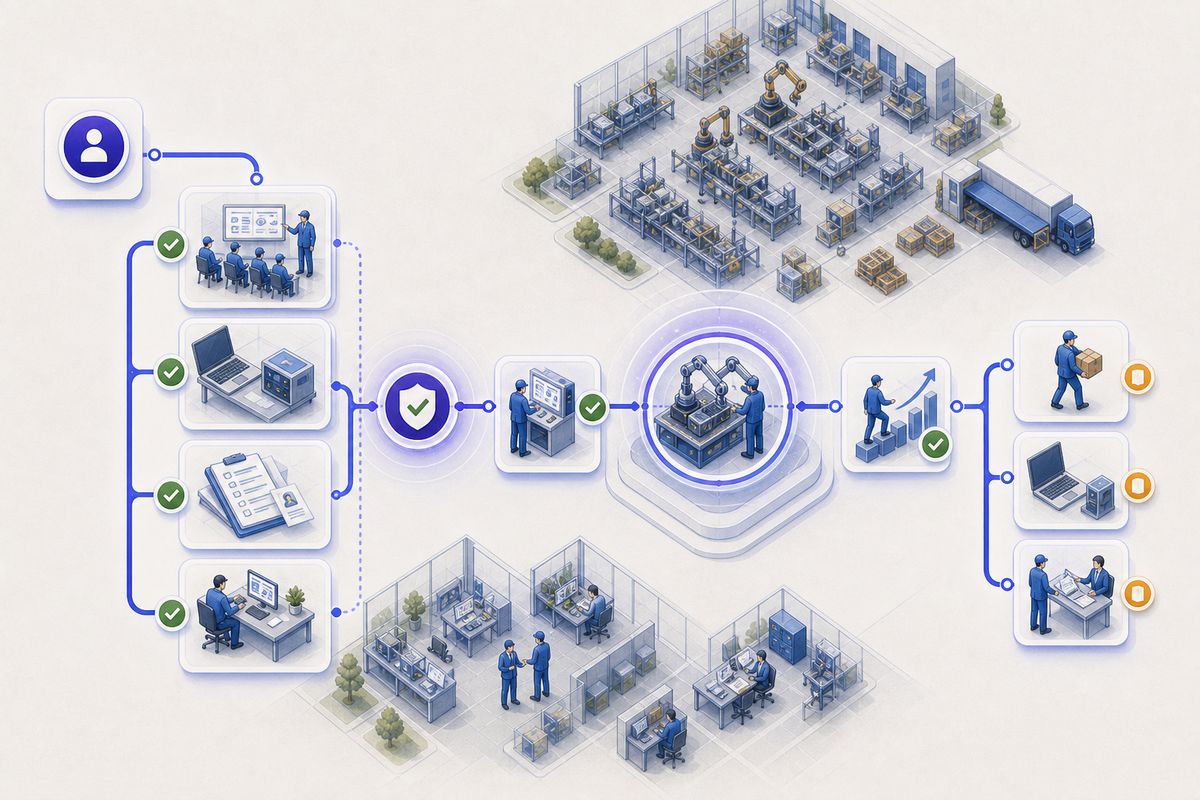
The route you sit on
- Employee created
- Onboarding
- Training plan
- Training
- Qualification
- Assigned
08 · Engineering
Engineering & industrialization
What is approved, which version is current, and what does a change affect?
What changes
Keep approved product, process and equipment information under version control. Once a version is approved it does not change — a new version replaces it, and work already running remembers the version it started under, so you can always see what a change affects.
What you get
- Projects with milestones, dependencies and decisions at each gate
- Targets, risks and budget against actual cost
- Technical releases and revisions, and how far each has progressed
- Engineering changes, showing everything each change affects
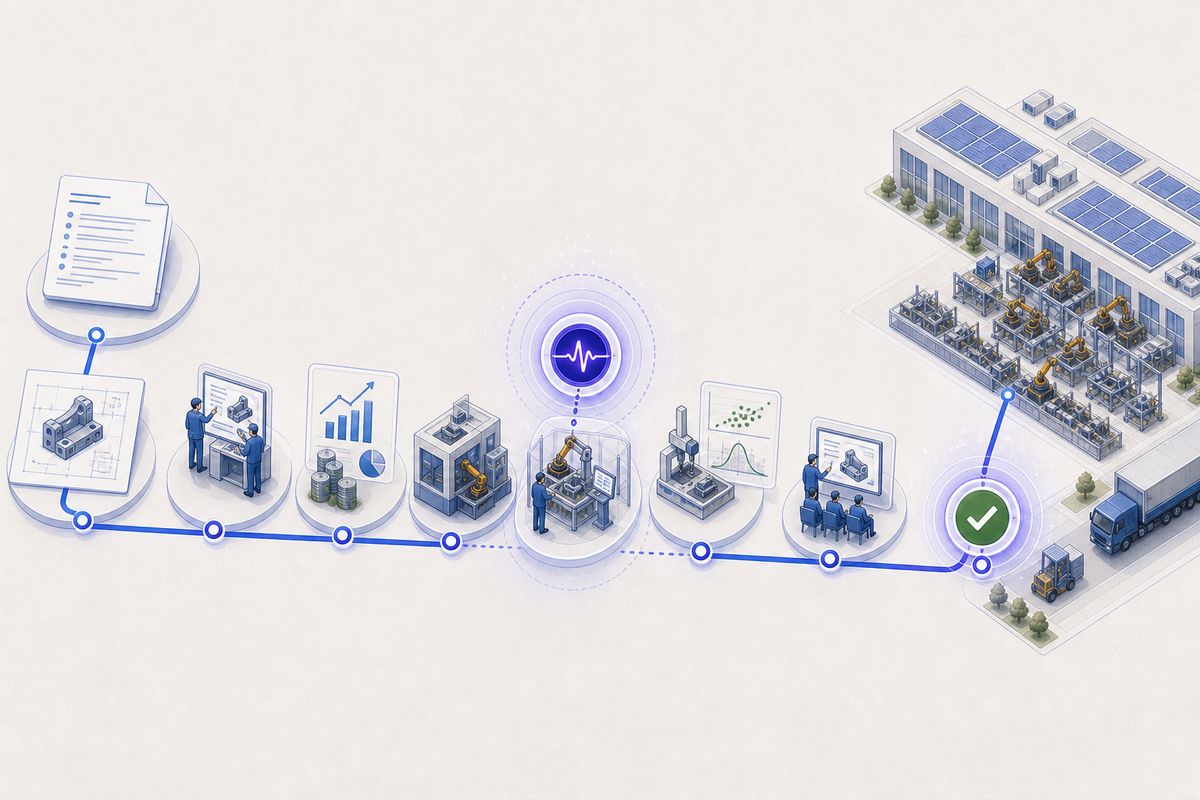
The route you sit on
- Requirement
- Process concept
- Tool readiness
- Trial
- Capability
- Serial release
The same role should mean the same thing across the factory.
Because the roles, processes and pages are standard, a person is trained on their role — not on a setup only their plant has ever seen. The same role means the same thing in the next plant, and in the documentation.
Talk about your plant